

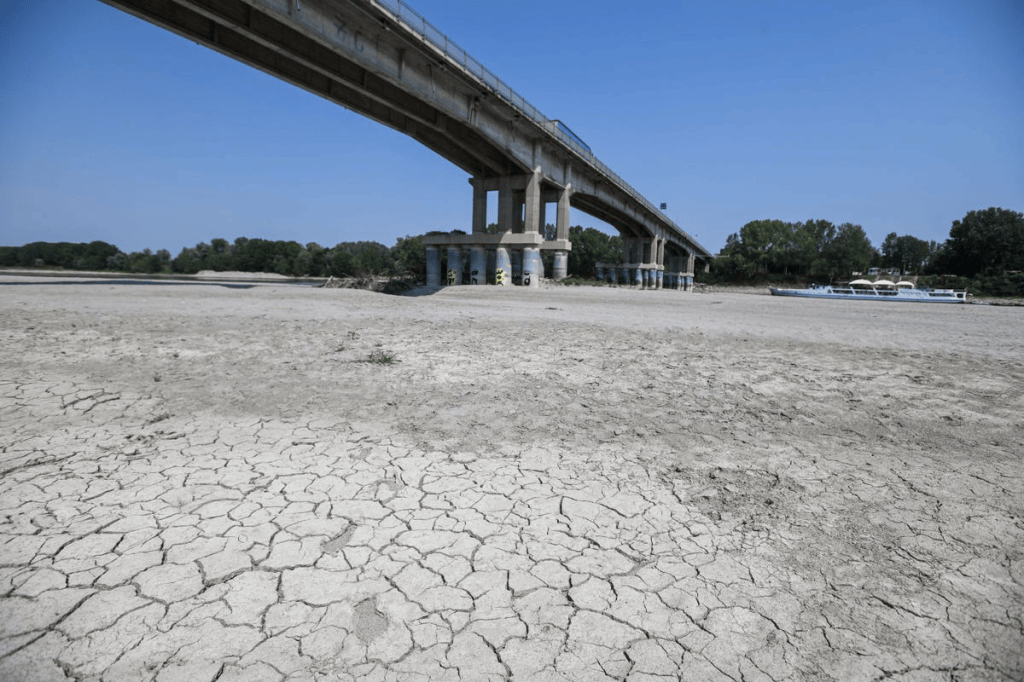
The image above shows the situation of the Valereja river around Poshet. The Valereja river is one of the most important river of the country as provides water to the Turley’s province farms which produce around the 27% of the national wheat and corn production.
An October with record temperatures
If in Poshet, located on the coast, the average maximum temperature for October is 22°C, this year the average temperature reached 24°C, with absolute values up to 32°C for several consecutive days and no precipitations.
A severely dangerous situation in the whole country as this winter the national rainfall recorded values between 40% to 60% below the average, especially in the hilly areas, where most of the rivers start.
All of those factors brought the country to a severe drought, especially in the southern part, that’s being hit by no or little water in the river and lake basins.
Crops and food supply at risk
Tamor imports around the 30% of the crops it needs, but the other 70% is mainly produced in the “GIPL” square (Gurgenen, Incubel, Poshet, Lavroug) for its positive climate, despite is worsening year by year.
Since the beginning of 2022, the crop production in this square decreased by 12%, compared to the same period of the last year. This made the government take important decisions such as taking 5B $ in debt to enact emergency measures.
According to the “National food supply institute”: “The food we produce might not be enough for 2 million of citizens if the drought continue to worsen at this speed”.
Ration of water in the horizon
In parallel, the water supply is at risk as well. In total, the country imports the 70-75% of the potable water, Though the auto-produced water is taken mainly from the region of Upper Tamor and the province of Zedela. Both areas recorded a reduction of the water production, in the last months, by 38%.
The government, with a limited budget, seems to be ready to issue a decree to ration the water to 65l daily per person, while the limit for the commercial and industrial use should be variable and more detailed in the decree, expected to come out on Monday.
Londu, a region of departure
The region of Londu, which correspond to the peninsula, always suffered from water supply and drought problems, mainly in the inner areas. Especially in the province of Tor, the southernmost province, the drought is not something new, but has been the ordinary since 2020, when it didn’t rain for 45 consecutive days between June and July before getting hit by a hurricane.
Since then, the region seen a mass-emigration to other parts of the country, especially the West. According to the first estimated values, more than 15 000 people left the province of Tor in 29 months and other 35 000 people are expected to leave the province before 2025.

